
















January 22, 2015
5 Tips for Shooting in Natural Light | Ask Anything
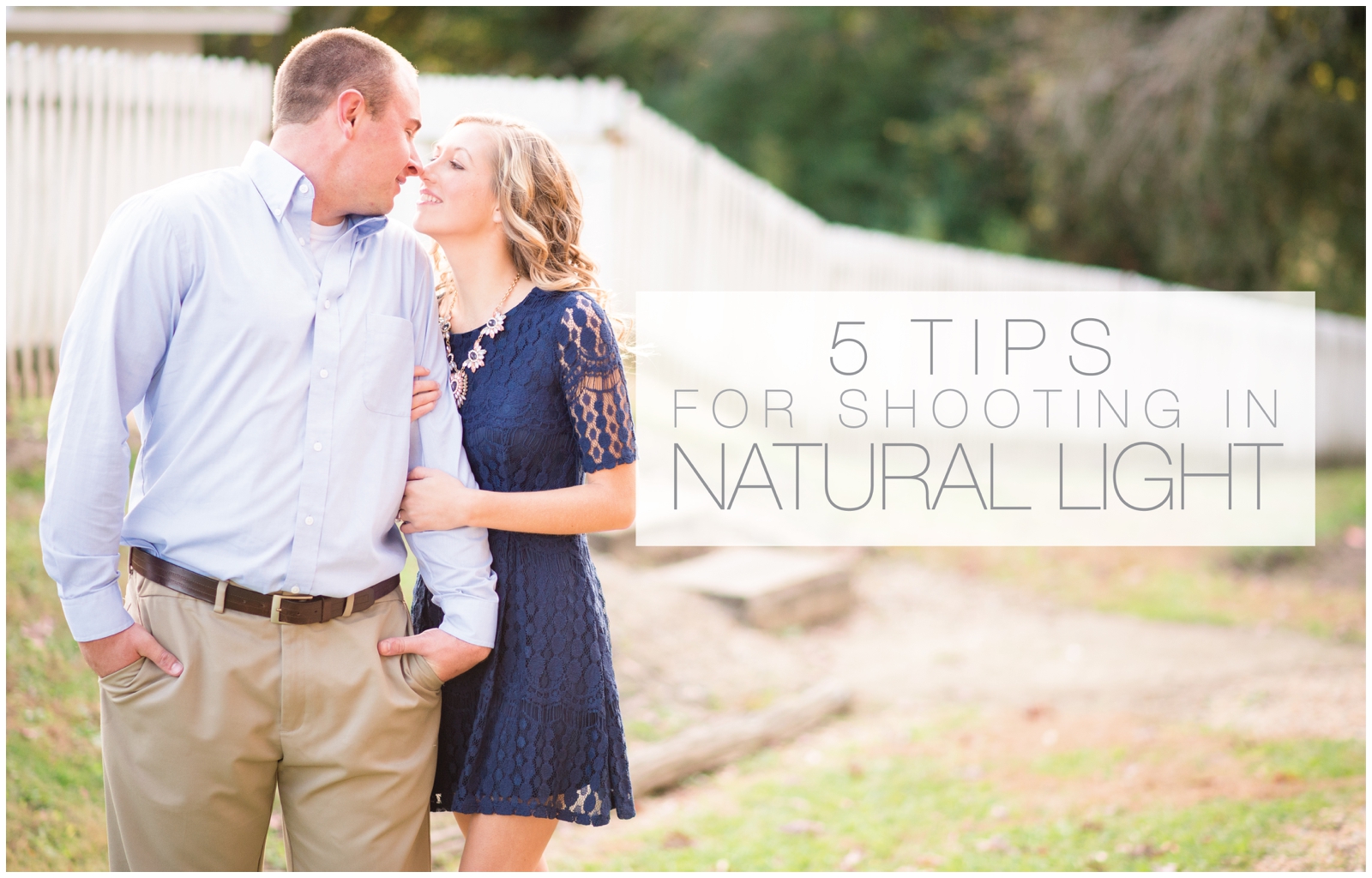
This is a topic that applies to ALL photographers out there! Whether you’re just starting out or you’ve been doing this for a while, learning light is one of the most important aspects of photography! In my opinion, light is the main factor in the quality of an image. You can have the most beautiful setting, gorgeous subjects, and the fanciest camera you can get your hands on, but if the light isn’t right, then the image will fall short. The best thing to do when learning light is do some basic research then go outside and practice, practice, practice!! No matter how much you read about light and how to use it properly, it’s not going to really click until you’re out there doing it! No matter the lighting conditions you’re dealt with- sunny, cloudy, overcast, etc.- if you know how to “see” and manipulate light, you can get amazing light no matter what!
I identify myself as a “natural light photographer” which basically means that I use natural light as opposed to artificial light. Of course, this isn’t completely true because I use artificial light for receptions and such. But for portraits, I’m using all natural light. So that means that the sun is my only source of light. And since I can pick up and move the sun or dial down it’s settings, I have to know how to manipulate the light and get it the way I want it in other ways! These are a few tips and tricks that I have learned along the way!
Position of the sun. In natural light photography, the sun is our only source of light. So it’s position relative to the camera and the subjects is vital. I find it’s best to keep the sun at a 45 to 90 degree angle from you to the subjects. The diagram below demonstrates this range.
 Doing this is beneficial for a few reasons. First is that it will create directional light which makes for nice highlights and shadows on the subject giving them more dimension and making them pop. Positioning the sun this way will also reduce haze in the image, which will be discussed in the next tip. This also prevents the sun from hitting the subjects face. We want to keep direct sunlight off of their faces because it can be very harsh causing you to lose detail. Also, when the sun hits the back of the subjects head, this will “backlight” them giving them that nice rim light that really makes them pop!
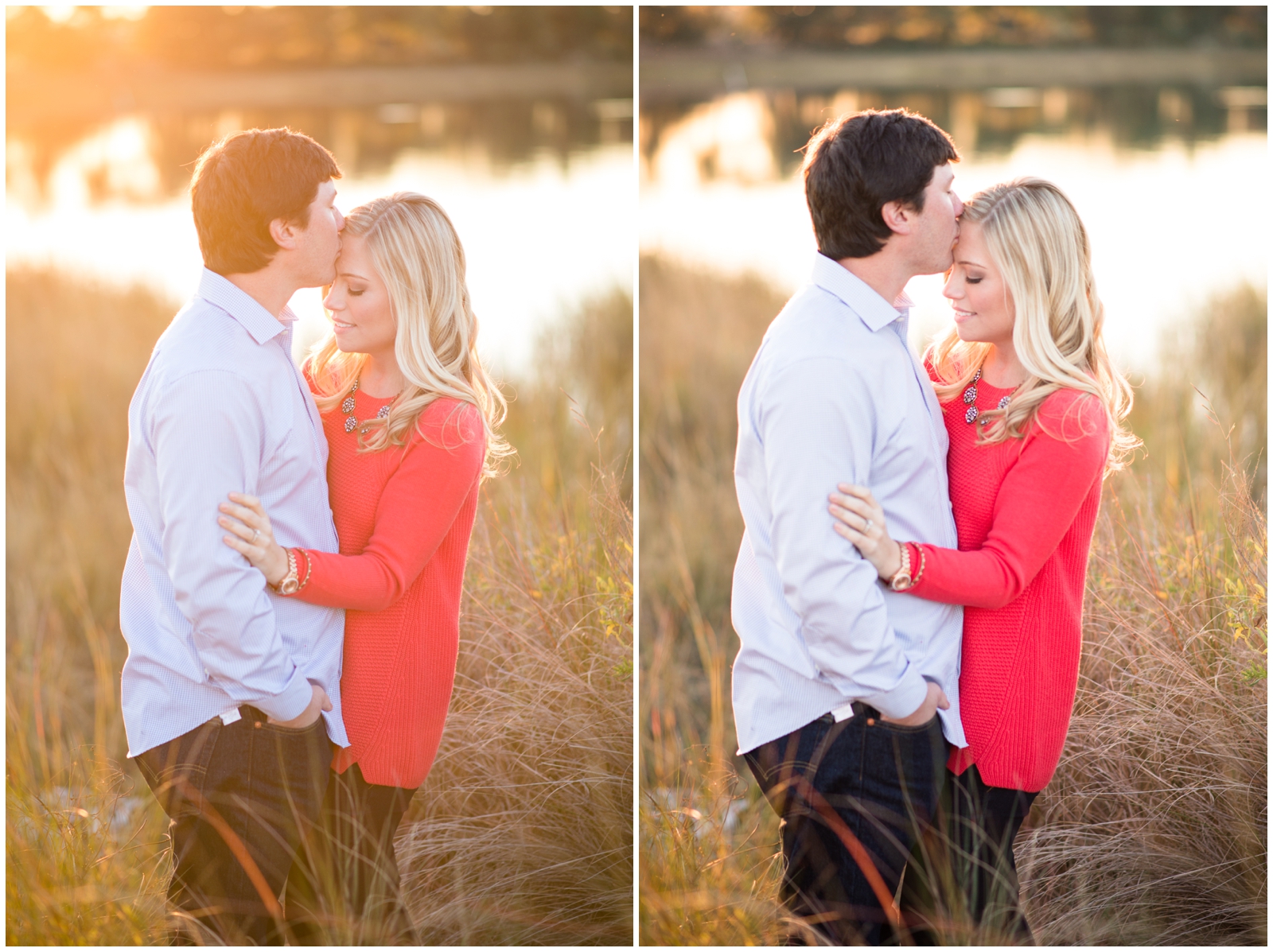
 Avoid haze. Haze occurs when the sunlight is coming directly into your lens. This makes for a low-contrast and blown-out image. So basically you want to block the sun from hitting your lens directly. This can be done several ways. The simplest is to put yourself in shade where the sun is not hitting you. If that is not an option, you’ll want to find a way to block the sunlight. Lens hoods can sometimes help with this. Or you can simply use your hand to block the sunlight. My favorite method is to have my assistant or second shooter block the light. I’ll basically just have them stand beside me following me around and positioning themselves so they are blocking the light. Another option is to slightly change your shot so that the sun is no longer pouring into the lens. Sometimes a very slight turn away from the sun can make the haze disappear. But I must say that haze can sometimes add a nice artistic effect when done properly. When the sun is very low in the sky, shooting directly into the sun can create for a soft artistic effect in the image. This is also how you get sun flare! The two pictures below were taking one after the other. The sun was very low, just about to set. I took the first shot and noticed the haze. At this point in the day when the sun is this low, the haze can actually have a nice artistic effect. But I knew that I wanted to get this shot without haze. So I had Branden use his hand to keep the sun from coming into the lens and ended up with the second image. What a difference!
 Look for natural reflectors. This one is especially helpful when you’re shooting in the middle of the day when the sun is high and bright! Since we’re positioning the sun behind the clients face, we need something to reflect light back onto their face to even out the harshness of the light behind them! This can be done using natural reflectors all around you! Light colored pavement, open fields, light colored wall, etc. You can even carry around an actual reflector for when you’re in a bind! When I’m looking for good light to shoot in, I’m also looking at the surroundings to see what light will be hitting their face. I recently did an engagement session in Busch Gardens at noon on a day when there wasn’t a cloud in the sky! Yikes! The lighting was very tricky! I really had to pull out all my natural lighting tricks for this one! One thing that really helped me was the light colored pavement throughout the park! Even when they were in harsh sunlight, the pavement was reflecting clean light back up onto their face! You can see what I mean in this picture below. If I was standing in front of big dark building or if the pavement was black instead of this light color, then their faces wouldn’t be as lit up! I also had Branden standing right next to me getting rid of a little bit of haze I was getting!
 In this shot the clouds were really dark and overcast, so the white driveway they’re standing on helped to light up their faces and give a little more brightness to the image! You would never know that it was dark and cloudy outside!
 Look for open shade. This tip is similar to the previous one in that you are utilizing relfected light. If you’re shooting a wedding or session in the middle of the day when the sun is high and bright, open shade will be your best friend! We’re always looking for soft and even light. Open shade can create that for you even on the brightest sunny day! Open shade is when you are just inside a shaded area facing towards the non-shaded area. So the subject is in shade and out of the harsh light, while the light from outside of the shade is reflecting back onto them! So now we’ve created soft and even light! Win!
When we shot the bridal party portraits before Kelsey’s wedding, it was still early in the day so the sun was still high and bright. So we used the shade created by the trees to put the girls in nice open shade. They weren’t in the direct harsh light and the wide open space behind me made for some nice reflected light back onto their faces! Plus, since the sun was peeking through the trees a little bit, that diffused light still gave them a little bit of rim light! This tip is also important when shooting in wooded areas. When shooting in the woods, you are often too far into the shade to benefit from the open shade technique. The tree cover is reducing the reflected ambient light, plus you’re getting a green color cast from the light reflected off the leaves! So when shooting in wooded areas, it’s best to be on the edge of the woods. So if they are still in the woods, the clean light from outside the woods is reflecting back on them! In the shot below, it was all open space behind me. So even though they were in a woodsy setting, they were getting nice light from the open non-shaded area behind me.
 Keep sun off of subjects face. This last tip is a more simple one. I want to get nice even light on the subjects face, so I’m always making sure that the sun is never shining directly onto their face. Because the sun isn’t usually directly behind them, I have to sometimes maneuver the couple to keep the sun off of the sides of their faces. This can be done be having one person turn with their back to the sun and block the sun from hitting the other person. It usually works best to have the guys be the sun blocker. You can also have the person that’s getting hit by the sun slightly turn their head away from the sun so that it is just hitting their hair and not their face. In the shot below, you can see how Anne is blocking the sun from getting onto Aaron’s face. And she is turned away from the sun enough so it is only hitting her hair and not her face.
 Want to see more from the ‘Ask Anything’ series? Click the links below!
How to do a Same-Day Slideshow
5 Tips for Shooting in Natural Light
Planning Ahead Using the Sun Seeker App
[…] last weeks post, I talked about the important role that light plays in the outcome of an image. Finding good light […]